Skip Hire in Wombourne
Wombourne is one of the largest villages in England, and it does not behave like a village when it comes to hiring a skip. It is really several places joined together: the old centre around the green, and the former hamlets of Giggetty, Blakeley, Ounsdale and The Bratch that grew into it through the last century. Each has its own streets, its own access and its own kind of housing, so the right skip and the right way to deliver it depend on which part of Wombourne you are in.
We are a family run firm based at Whiston Mill near Penkridge, and we run skips from 4 to 14 yards down through Wolverhampton and out across Wombourne, Swindon, Trysull and the villages towards the Staffordshire and Worcestershire border. We are registered with the Environment Agency, and everything we collect is taken to a licensed transfer station.
What a Wombourne customer actually needs from a skip firm
Because Wombourne absorbed several separate settlements, no two parts of it deliver the same way. The first thing we want when you call is not just the postcode but a sense of which part of the village you are in, because that decides the vehicle, the timing and often the skip size.
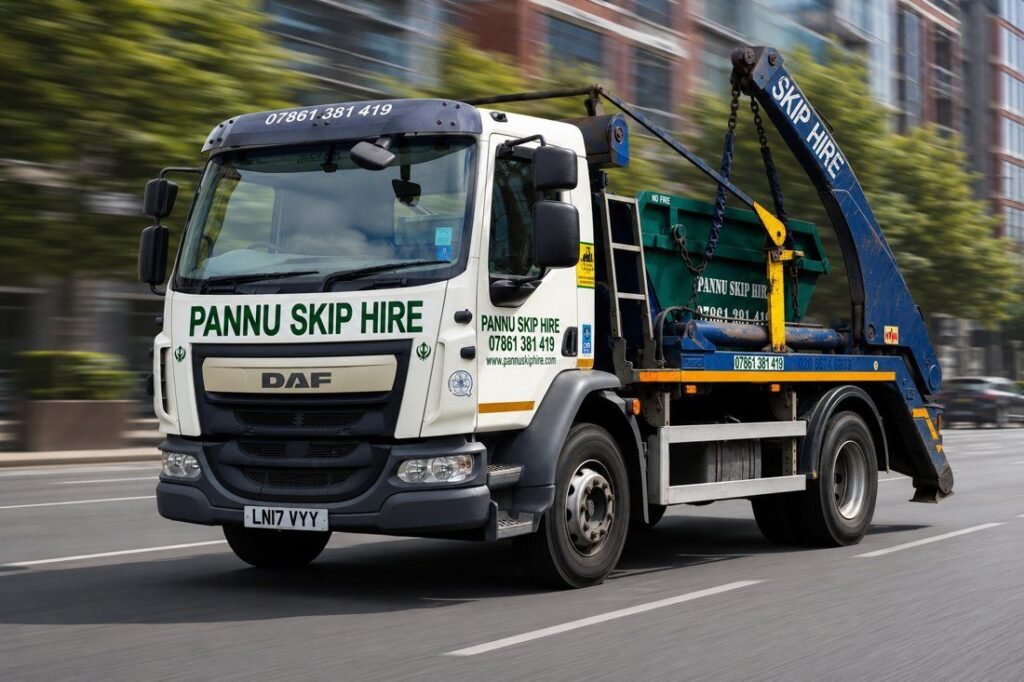
We treat Wombourne as its estates, not as one address
A delivery to Giggetty is a different job from one to Ounsdale or The Bratch. The older lanes near the canal and the green are tight; the post war and later estates that filled in between the old hamlets have driveways and easier access. Tell us the area and we plan accordingly, rather than turning up and discovering the constraint.
We come down through Wolverhampton, and we plan for it
We will be straight with you about geography. Wombourne sits about four miles south west of Wolverhampton, on the edge of the West Midlands, and our yard is up near Penkridge. That means we reach you by coming down through Wolverhampton and out on the Bridgnorth Road side, rather than being ten minutes away. We plan our Wombourne runs around that, which is why it helps to give us a little notice. What you get in return is a firm that knows the roads in and treats the trip as normal, not as an awkward outlier at the end of a round.
Flexible collections that suit a commuter village
Wombourne is a commuter village, and a lot of the domestic work happens around people’s jobs: a weekend garden clearance, an evening booking, a kitchen fit squeezed into a fortnight off. Being flexible on collection matters more here than a headline price. We can leave a skip a little longer or swap a full one when a job runs on, so you are not left with a full skip and a half finished job over a bank holiday.
Domestic and commercial, and honest about which you are
There is a real mix of work in and around Wombourne: household renovation across the estates, trade work on the newer developments, and commercial jobs on the shops at Giggetty and Blakeley and the units on the edge of the village. Domestic and commercial jobs need different handling, and we do not run them off the same script.
Driveway deliveries wherever possible, permits when not
Most of Wombourne’s housing, particularly on the later estates, has off street parking, so most of our deliveries here go on a driveway with no permit needed. Where a property has no drive, usually in the older parts near the green and the canal, the skip goes on the road and needs a permit, which we arrange for you.
Choosing the right size, and the mistakes that cost money
The single most useful thing on this page is getting the size right, because the wrong choice is what costs people money. Order too small and you pay for a second skip. Order too big and you pay for space you cannot legally fill, because weight, not volume, is what limits a loaded skip. Bin bag figures are a planning guide, not a promise.
| Skip size | Approx. bin bags | Best for | Heavy waste | Typical project | Not suitable for |
|---|---|---|---|---|---|
| 4 yard mini | 35 to 40 | Small clearances and dense waste | Yes, ideal | Bathroom strip out, small garden clear | Whole house or bulky loads |
| 6 yard midi | 55 to 65 | The average domestic job | Yes | Kitchen refit, rental turnaround | Full house clearance |
| 8 yard builders | 75 to 85 | Building and renovation waste | Within limits | Extension, re roof, refurbishment | A full load of soil or rubble |
| 10 yard maxi | 95 to 105 | Bulky, lighter waste | Mixed loads only | Loft conversion, house clearance | Heavy rubble or soil |
| 12 yard maxi | 115 to 125 | Commercial light waste | No | Shop or office strip out | Heavy material; road placement |
| 14 yard maxi | 135 to 145 | Large low weight clearances | No | Warehouse or unit clearance | Heavy material; road placement |
On mobile, swipe the table sideways to see every column. The 12 and 14 yard skips are private land only because they are too long to be permitted on a public highway.
When to size up
Size up when the waste is light and bulky, when you are clearing more than you can easily picture, or when the alternative is a second delivery. Going one size larger on light waste is nearly always cheaper than hiring twice, because you pay for delivery, collection and disposal each time.
When to size down
Size down when the load is heavy. Soil, brick, concrete, hardcore and old floor screed reach the safe carrying weight long before they fill the skip, so a 4 yard packed with rubble can weigh more than a 10 yard of furniture. If your job is mostly heavy material, a smaller skip, or two, is both the correct and the cheaper answer.
The three most common mistakes
First, ordering by the size of the room rather than the weight of the waste. Second, choosing a 12 or 14 yard skip for a job that has to go on the road, when those sizes are private land only. Third, forgetting that a skip cannot be filled above the rim, so the usable capacity is the level line, not the brim.

The right skip for the job in hand
Quick answers by job type, with the waste each one produces and the mistake to avoid. These are starting points; the material and the access always have the final say.
Kitchen renovation
6 yard. Old units, worktops, appliances (not fridges), flooring and tiling, mostly bulky rather than heavy. Break the carcasses down first. Mistake: underestimating stone or composite worktops.
Bathroom renovation
4 yard. A cast iron or steel bath, wall tiles, floor screed and old sanitaryware. A weight job, so it fills its limit while looking part empty. Mistake: ordering a 6 yard and paying for space the weight will never let you use.
Garage clearance
4 to 6 yard, depending on whether it is boxes or old paving and engine parts. Mistake: garages hoard prohibited items, so paint tins, gas bottles, batteries and old fridges turn up, and none can go in.
Garden clearance
6 yard for green waste. Hedge cuttings, prunings, turf and branches are bulky and light, and a single mature hedge fills more than people expect. Keep any soil or paving in a separate smaller skip.
Loft conversion
10 yard. Stored belongings, old insulation and boarding are almost pure volume at little weight. Mistake: ordering small and needing a swap halfway through.
House extension
8 yard, often on rotation. Continuous mixed waste over weeks. Keep dug out subsoil separate from build waste, because it is far denser.
Roof replacement
8 yard, but size to the tile. A full skip of concrete tiles is over weight while looking half full, so tell us the tile type. Slate and timber strip outs behave differently.
Driveway replacement
4 yard, sometimes two. Nearly all heavy material: broken concrete, old tarmac, sub base and soil. The classic case for a smaller skip, because the weight caps it long before the volume.
Office refurbishment
10 to 12 yard. Desks, chairs, partitioning, filing and cabling, awkward and light. Plan around building access and lift availability, and consider working outside office hours.
Retail shop refit
12 yard with private space, 8 or 10 yard kerbside. Shopfronts, counters, shelving and flooring are bulky and light, and the Giggetty and Blakeley shops often have limited frontage, which pushes the skip onto the road.
Warehouse clearance
12 or 14 yard. Pallets, packaging, racking and obsolete stock, high volume and low weight, on sites with the yard space for a maxi skip.
Landscaping
Depends on the mix. Green waste is light and bulky, soil and paving are dense and heavy, and they behave in opposite ways. A larger skip for greenery and a smaller one for spoil is often cheaper than forcing both into one.
DIY projects
4 yard for most. Weekend jobs produce less than people think once bulky items are broken down. If you cannot judge it, describe the pile over the phone.
House move
6 yard. The clear out before or after a move is mostly furniture, carpet and boxes: bulky, light and easy to underestimate. Mistake: leaving the booking too late and clashing with the removal date.
Rental property clearance
6 or 10 yard, depending on what the tenant left. Speed of collection matters most, because the turnaround window between tenancies is short.
Probate house clearance
10 yard. A full house of furniture and belongings is nearly always underestimated because it is bulky. Safer to start with a 10 than a 6, and it saves a second delivery at a difficult time.
School refurbishment
10 to 12 yard, timed around term dates. Furniture, fittings, flooring and fixtures, usually cleared in the holidays. Access and safeguarding around a school site make timing everything.
Church maintenance
6 to 8 yard. Older buildings produce dense, awkward waste: old timber, plaster, stone and fittings. Watch for asbestos in older outbuildings and heating rooms, which cannot go in a skip.
Construction projects
8 yard on rotation. Mixed waste, heaviest at the base. Keep plasterboard separate, because it needs its own disposal route and contaminates a mixed load if buried in it.
What each skip actually holds, in real terms
Bin bags are a rough guide, so here is each size described in things you can picture.
4 yard mini skip
Around 35 to 40 bin bags. A small bathroom strip out, a garden tidy up, or a single garage cleared of the lighter clutter. The right size for a load of rubble or soil, because heavy material caps it early.
6 yard midi skip
Around 55 to 65 bin bags. A full kitchen renovation, a medium landscaping project, or a couple of rooms cleared of furniture and carpet. The size most Wombourne households end up ordering.
8 yard builders skip
Around 75 to 85 bin bags. The mixed waste from an extension or a re roof, or a substantial refurbishment. The trade default, but not for a pure load of rubble, which would be over weight.
10 yard maxi skip
Around 95 to 105 bin bags. A loft conversion, a full house clearance, or a large garden redesign. Bulky and light rather than heavy, and the largest skip that can go on the road with a permit.
12 yard maxi skip
Around 115 to 125 bin bags. A shop or office strip out, where partition board, shelving and packaging fill space without much weight. Private land only.
14 yard maxi skip
Around 135 to 145 bin bags. A warehouse or unit clearance of pallets, packaging and obsolete stock. Our largest, private land only, and for light waste on a site with room to place and lift it.
Delivering skips across Wombourne, area by area
The old village and the green
The historic heart of Wombourne is built around one of the largest village greens in the country, with the round towered church of St Benedict Biscop nearby. The streets here are older and tighter, some with limited or no off street parking, so a skip often means the road and a permit. Common Road, Maypole Street and School Road carry the daily traffic, and the school run adds to it. For a job in this part of the village we usually suggest an early slot and, where kerb space is tight, the smallest skip that will do.
Giggetty and Giggetty Lane
Giggetty was a separate settlement before it became part of Wombourne, and it still has its own small parade of shops. Housing here is mixed, and Giggetty Lane and the surrounding streets range from straightforward to tight. It is a common area for domestic renovation, and access is usually workable with the right vehicle.
Blakeley and Ounsdale
Blakeley, with its own shops, and Ounsdale sit among the estates that filled in between the old hamlets. This is largely twentieth century housing with driveways and reasonable access, and it is the heartland of everyday kitchen, bathroom and garden work. Most skips here go on private land, which keeps things simple.
The Bratch and the canal
The Bratch is known for its striking three lock staircase on the Staffordshire and Worcestershire Canal, which runs down the western side of the village. The streets near the canal and the locks are older and can be narrow, and anything close to the towpath needs a little thought about access. It is a conservation minded part of the village, so careful placement matters.
The Smestow Valley and the old railway
The former railway line through Wombourne is now the Smestow Valley walk, with the old station serving as a cafe. This is green corridor rather than road, so it does not affect deliveries directly, but it is part of why the village feels less built up than its size suggests, and why some estates back onto green space with restricted rear access.
The Pool House Road side and new growth
New housing is coming to the edges of Wombourne. In September 2025 South Staffordshire Council approved 121 new homes in the village, and Taylor Wimpey has sought permission for 89 homes on a greenfield site off Pool House Road, of which around 40 per cent would be affordable, with a play area and new wildlife habitats. The schemes drew significant local objection, partly over flooding and traffic. Whatever their final shape, more housing means more of the follow on work that reaches a firm our size: gardens landscaped, garages converted, extensions built in the years after people move in.
Parking, traffic and school times
Wombourne is busy for a village. The centre fills through the day, the shopping areas at Giggetty and Blakeley draw local traffic, and the school times tighten the roads around the village twice a day. None of this stops a delivery, but it is why we plan the timing. An early slot, before the village wakes up, is worth more than any other piece of planning on a job near the centre.
Permits for a skip in Wombourne
Private drive or public road
If the skip sits entirely on your own driveway or private land, no permit is needed, and across most of Wombourne’s estates that is the normal situation. If any part of it sits on the public highway, which includes the road, the footway and the verge, a permit is required. In the older parts of the village near the green and the canal, where off street parking is scarce, that comes up more often.
District council for services, county council for permits
Wombourne is in the South Staffordshire district, and South Staffordshire Council handles bins, planning and local services. But it does not issue skip permits. Staffordshire County Council is the highway authority, and the permit comes from the county. If you have been looking on the district council site for one, that is why you could not find it.
The council process, and who applies
You cannot apply for your own skip permit. Staffordshire County Council only accepts applications from skip operators registered with it in advance, so we lodge the application on your behalf as part of the booking. You tell us the skip is going on the road, and we deal with the paperwork and the conditions.
Lead times
Because the permit has to be granted before the skip is placed, a road delivery needs more notice than a driveway drop, which can often go out quickly. Give us as much warning as you can, particularly for a job near the centre where placement may need more thought.
Safety lighting, cones and conditions
A permitted skip on the road carries conditions set by the county: reflective markings, lighting at night, and cones where the placement calls for them, along with rules about not obstructing drainage, access, hydrants or utility covers, and keeping the way clear for everyone including people with mobility or visual impairments. Placing and collecting are restricted to set hours. We supply and fit the markings, lighting and cones as part of a permitted delivery, so it is not something you need to buy or arrange.
Permit costs vary
The permit fee is set by the county council and is separate from the skip hire itself, and fees and conditions change from time to time, so we will tell you the current position when you book. We are describing how the process works rather than giving legal advice; the definitive details are published by Staffordshire County Council.
What can and cannot go into your skip
Accepted waste
- Wood and timber, including floorboards, joists, fencing, pallets and old furniture frames
- Metal such as radiators, gates, railings, guttering, pipework and shelving
- Furniture, taken apart where you can to make the space go further
- Cardboard, flattened, which makes up the bulk of shop and clearance jobs
- Rigid plastic, including guttering, non hazardous fittings and packaging
- General household waste such as carpets, boxes and non electrical fittings
- Soil from excavation and landscaping, within weight limits
- Concrete, bricks and hardcore, which are dense, so a smaller skip applies
- Garden waste, including hedge cuttings, branches, prunings and turf
- General building and construction waste from renovation jobs
- Mixed loads, which is the normal state of most domestic and building work
- Plasterboard, accepted but kept separate because it needs its own route
What cannot go in, and why each is excluded
- Paint, solvents and liquids. Liquid waste seeps through a load, spoils anything recyclable and cannot be separated out. Dried, empty tins are usually fine; part used ones are not.
- Tyres. Barred from landfill by law and required to go through a dedicated recycling stream.
- Gas bottles. Pressurised, and a real explosion risk when a skip is tipped or the waste is crushed at a transfer station.
- Asbestos. A controlled hazardous material that only a licensed contractor may remove. It hides in older garage roofs, artex, floor tiles and insulation board, common in a village with Wombourne mix of older and mid century property.
- Batteries. Car and household batteries contain heavy metals and acid, and are one of the commonest causes of fires in waste vehicles.
- Electrical appliances. Covered by separate electrical waste regulations and recovered through their own route.
- Fridges, freezers and air conditioning units. They contain refrigerant gases that must be drawn off under controlled conditions before the unit is broken up.
- Medical and clinical waste. Needles, dressings and similar require specialist handling.
- Hazardous chemicals. Weedkiller, pesticide, fuel and similar all need proper disposal, never a skip.
If you are unsure about an item, ask before it goes in. A contaminated load costs far more to deal with than a phone call.
What happens to your waste after we collect it
A skip has not been a one way trip to landfill for a long time. Everything we collect from Wombourne goes to a licensed transfer station to be sorted.
Sorting and transfer stations
At the transfer station the load is broken down. Bulky items come off first, then the rest is separated into streams: timber, metals, inert material such as brick and concrete, plasterboard, green waste and the genuinely non recoverable fraction. Timber is chipped for board or biomass, metal is recovered for reprocessing, and broken brick and concrete is crushed into recycled aggregate that often goes back under new roads and foundations. Green waste is composted. Only what cannot be recovered goes to final disposal.
Responsible disposal and why segregation matters
What you put in decides how much comes back out. A single tin of paint tipped into a mixed load can spoil material that would otherwise have been recycled, which is the real reason for the prohibited list and for keeping plasterboard separate.
Your duty of care
Under UK law the duty of care for waste stays with whoever produced it, even after the skip has gone. Using a carrier registered with the Environment Agency, and being able to show it, is how that duty is met. Our registration is CBDU576197, and it is on the public register for anyone, including you, to check. It is worth checking for any company you use, not just us.
A practical checklist for delivery day
- Measure the access. The lorry needs room to reverse and clear height above to lower and lift. Watch for overhanging branches, low cables and carport roofs.
- Protect the driveway. A loaded skip is heavy enough to mark block paving, tarmac or resin. Scaffold boards spread the load and cost far less than a repair.
- Reserve the space. Move cars and bins beforehand, and on a busy street keep the spot clear so we can place the skip where you want it.
- Separate prohibited waste. Set aside anything on the banned list before we arrive, so it does not end up in the skip by mistake.
- Think about loading order. Heavy and flat items at the bottom, spread out; bulky items broken down. Wasted space is space you have paid for.
- Do not overfill. Load level with the rim and no higher, because an overfilled skip cannot be sheeted for the road and cannot legally be lifted.
- Consider the weather. Soil, plasterboard and green waste soak up rain and gain weight quickly, so cover a nearly full skip if heavy rain is due.
- Mind the neighbours. On a tight street a quick word heads off most disputes, particularly if the lorry will briefly block the road.
The pitfalls worth avoiding
- Ordering too small. The commonest mistake, usually from judging by the room rather than the waste. Describe the material and we will size it properly.
- Mixing in prohibited waste. One fridge or a few paint tins can turn a recoverable load into a costly problem.
- Blocking access. A skip placed where the lorry cannot reach it on collection day means a wasted trip.
- Ignoring the permit. Assuming a road skip can go out same day, when the permit has to be granted first.
- Overloading. Filling above the rim, which means the skip cannot be lifted and the job stalls.
- Booking collection too early. Losing the skip before the job is finished.
- Booking too late. Leaving the order until the day of the work and finding no slot, particularly around weekends and bank holidays.
Frequently asked questions
The villages we cover around Wombourne
Wombourne sits in a cluster of villages on the Staffordshire edge of the Black Country, and we cover them as part of the same territory. Immediately around it, Swindon and Trysull are common calls, along with Himley, with its hall and parkland, and Wall Heath just over the boundary. A little further out we reach Kingswinford, Sedgley, Wordsley, Claverley, Pattingham and the Halfpenny Green area, and north towards Perton, Codsall and Penn as they run back up towards Wolverhampton.
For the towns with their own detailed local pages, see our guides to Wolverhampton to the north east, and Penkridge, Stafford, Cannock, Stone and Rugeley further up towards our base.
Full sizes are on our skip sizes guide, and domestic, builders, commercial, same day and wait and load options are on our services page.
Need a skip in Wombourne?
Tell us your postcode, which part of the village you are in, and what you are clearing, and we will recommend the right size and give you a clear price. If it has to go on the road, we will apply for the permit.