Skip Hire in Penn
Penn is really two places with one name, and it matters more than you would think when you hire a skip. Upper Penn, around St Bartholomew’s church and east of the A449 Penn Road, is a suburb of Wolverhampton. Lower Penn, the smaller village around St Anne’s church out towards the canal, sits in South Staffordshire. The boundary between them runs right through Penn, and which side of it you are on decides which council issues your skip permit.
We are a family run firm based at Whiston Mill near Penkridge, and we run skips from 4 to 14 yards across the whole of Penn and the villages around it. We are registered with the Environment Agency, everything we collect goes to a licensed transfer station, and we sort out the right permit for your side of the boundary. This page explains how it works.
What matters when you hire a skip in Penn
The thing that catches Penn customers out is the boundary. It is the reason two neighbours a few streets apart can face a different council for the same job, and it is exactly the sort of local detail we spend our time getting right so you do not have to.
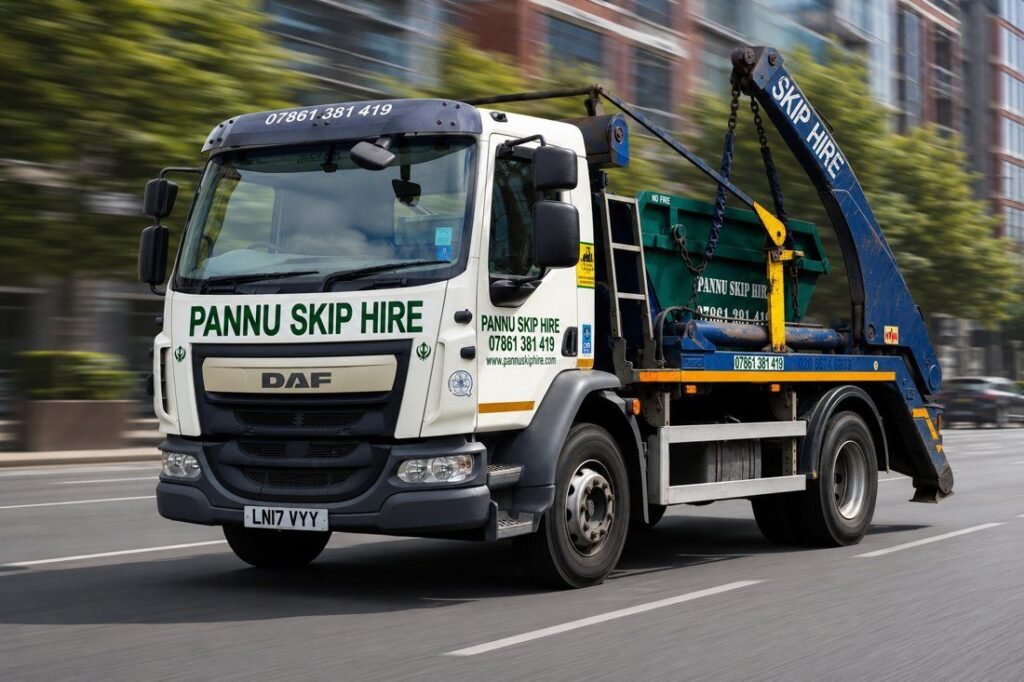
We know which side of the boundary you are on
Upper Penn, on the Wolverhampton side, and Lower Penn, in South Staffordshire, look continuous on the ground but are administered separately. For a driveway skip it makes no difference at all. For a skip on the road it decides who issues the permit, and we work that out from your address before we book, so there is no confusion on the day.
We reach Penn on the A449 through Wolverhampton
We will be straight about geography. Penn sits on the south western edge of Wolverhampton, and our yard is up near Penkridge, so we reach you down the A449 Penn Road corridor rather than from around the corner. We plan our Penn runs around that, which is why a little notice helps, and what you get back is a firm that knows the roads in and treats the trip as routine.
The right size for an area of older and larger housing
Penn has a good deal of substantial older property, particularly on the Wolverhampton side, along with the more rural housing around Lower Penn. Both tend to produce heavier, more awkward waste than a modern estate, and both often have the space for a driveway skip. We would rather talk through what you are clearing and where it can sit than guess, because the right size first time is what saves you money.
Flexible collections and clear communication
Jobs slip, and we roll with it. We can leave a skip a little longer or swap a full one when a job runs on, and we will tell you plainly what size you need, what it costs and what happens on the day. That clarity, more than a headline price, is what customers come back for.
The six sizes, and which suits a Penn job
4 yard mini skip hire in Penn
The right choice for heavy waste and for tighter spots. Soil, brick, hardcore, concrete and old screed reach the safe carrying weight long before they fill the skip, so a small skip of dense material is a full one. A bathroom strip out, a small garden clear or lifting an old path all sit here, and it fits where kerb space is limited.
6 yard midi skip hire in Penn
The usual domestic choice across Penn’s houses with driveways. A full kitchen removal fits, with old units, worktops, flooring and tiling, and it still leaves room on a typical drive. It is also the size most landlords take for a turnaround between tenancies.
8 yard builders skip in Penn
The trade standard for extensions, re roofs and full refurbishments, taking timber, plasterboard offcuts, broken tile, packaging and stripped out fittings. A caution for roofing: a skip filled entirely with concrete tiles hits its weight limit while still looking half empty, so tell us the tile type.
10 yard maxi skip hire in Penn
For bulky, light waste. Loft conversions, full house clearances and large garden projects produce volume rather than weight, and this is the largest skip that can go on the road with a permit. If you have no driveway, it is your ceiling.
12 and 14 yard maxi skips in Penn
Private land only, and light waste only. Commercial sizes for shop and office strip outs and unit clearances, where partition board, shelving and packaging fill space without much weight. They need a yard or private area with room for the lorry to place and lift safely, so they are never an option on the road.
Full dimensions for every size are on our skip sizes guide.
Our most popular size
Midi Skips in Penn
| Skip size | Approx capacity | Typical Penn job | On a Penn driveway? |
|---|---|---|---|
| 4 yard mini skip | 35 to 40 bin bags | Small garden clearouts and single room declutters | Fits any driveway |
| 6 yard midi skip | 55 to 65 bin bags | Kitchen or bathroom refits and garden projects | Fits most Penn driveways, our most popular |
| 8 yard builders skip | 75 to 85 bin bags | Extensions, renovations and building waste | Fits a wider driveway |
| 10 yard maxi skip | 95 to 105 bin bags | Full house clearances and larger light waste jobs | Larger driveways, or the road with a permit |
| 12 yard maxi skip | 115 to 125 bin bags | High volume, low weight clearances | Private land only |
| 14 yard maxi skip | 135 to 145 bin bags | Major clearances of bulky, light material | Private land only |
On a phone, swipe the table sideways to see every column. The 12 and 14 yard skips go on private land only, never the public road.
The two Penns, and why the permit depends on your side
This is the section worth reading before you book a road skip, because Penn is genuinely split and it changes who you deal with. The historic parish of Penn is made up of two townships. Upper Penn, east of the A449 Penn Road and around St Bartholomew’s church, was absorbed into Wolverhampton as the town grew and now sits within the city. Lower Penn, the older village around St Anne’s church roughly a mile to the west, stayed in South Staffordshire.
On your own driveway, none of this matters
If the skip goes entirely on your driveway or private land, there is no permit and no council involved, wherever in Penn you are. Across most of Penn’s housing that is the normal situation, and it keeps the booking simple.
On the road in Upper Penn, Wolverhampton
If your property is on the Wolverhampton side and the skip has to go on the public highway, the permit comes from City of Wolverhampton Council, which is a unitary authority and handles its own highways. We are set up to apply on that side, and as with everywhere, the application has to come from the operator rather than from you.
On the road in Lower Penn, South Staffordshire
If your property is in the Lower Penn village or the South Staffordshire part of the parish, the permit comes from Staffordshire County Council instead, because the county is the highway authority there. South Staffordshire Council handles bins and planning, but not skip permits. Different authority, same principle: we lodge the application for you.
How we handle it for you
You do not need to work out which side you are on or which form to fill in. Tell us the address and whether the skip is going on the road, and we identify the correct authority, apply for the permit and deal with the conditions. It is the sort of thing that looks trivial until a skip firm gets it wrong and your skip cannot be placed.
Delivering skips across the Penn area
Upper Penn and the A449 corridor
Upper Penn is the larger, suburban side, running along and east of the A449 Penn Road as it climbs out of Wolverhampton. It is a settled residential area with a good deal of substantial older housing, much of it with driveways, so many skips here go on private land. The A449 itself is busy, so for anything close to it we plan the timing rather than just the day.
Lower Penn village
Lower Penn is the older, smaller village to the west, around St Anne’s church and out towards the Staffordshire and Worcestershire Canal. It is a rural, green belt community of a little over a thousand people, with larger plots, country lanes and more landscaping and outbuilding work than a typical suburb. The lanes can be narrow, so access and vehicle choice matter here more than in the town.
Between Penn and Wombourne
Lower Penn sits roughly a mile and a half from Wombourne, and the two are part of the same run for us, along with the countryside and the canal that link them. The historic Wodehouse, an eighteenth century mansion, lies in this stretch, a reminder that this is old, established country rather than new estate.
Access, lanes and green belt
The character of the Penn area shifts quickly from suburban streets on the Wolverhampton side to open green belt around Lower Penn. That affects delivery in practical ways: wide, made up roads and driveways in Upper Penn, narrower lanes and longer approaches in the village. Telling us exactly where you are lets us send the right vehicle and place the skip cleanly first time.
What can and cannot go into your skip
Accepted waste
- General household waste, from furniture and carpets to boxes and non electrical fittings
- Wood and timber, including floorboards, joists, fencing and pallets
- Metal such as radiators, gates, railings, guttering and pipework
- Brick, concrete and hardcore, which are dense, so a smaller skip applies
- Soil and turf from excavation and landscaping, within weight limits
- Garden waste, including hedge cuttings, branches, prunings and turf
- Construction and renovation waste, the mixed output of most building jobs
- Cardboard, plastic packaging and non hazardous fittings
- Plasterboard, accepted but kept separate because it needs its own route
What cannot go in, and why
- Asbestos. Legally classed as hazardous, and removable only by a licensed contractor. In Penn it lurks in the roofs of older garages, in artex, in old floor tiles and in insulation board, which the area has plenty of given its stock of larger period homes.
- Paint, solvents and liquids. They seep through a load, spoil anything recyclable and cannot be separated out. A tin that is bone dry and empty can go in; one with paint still in it cannot.
- Gas bottles and aerosols. Pressurised, and an explosion risk when a skip is tipped or the waste is crushed.
- Tyres. Barred from landfill by law, with their own recycling route.
- Fridges, freezers and air conditioning units. Their refrigerant gases must be drawn off under controlled conditions before the unit is broken up.
- Electrical appliances. Covered by separate electrical waste regulations.
- Batteries. The metals and acid inside are a common cause of fires in waste vehicles.
- Hazardous chemicals, including weedkiller, pesticide and fuel.
- Clinical and medical waste, which needs specialist disposal.
If you are unsure about an item, ask before it goes in. A contaminated load costs far more to deal with than a phone call.
Where your waste goes, and your duty of care
Everything we collect from Penn goes to a licensed transfer station to be sorted, not straight to disposal. Bulky items come off first, then the load is separated into streams: timber, metal, hardcore, plasterboard, greenery and the genuinely non recoverable fraction. Timber is chipped for board or biomass, metal is recovered for reprocessing, and broken brick and concrete is crushed into recycled aggregate that often goes back into construction. Green waste is composted, and only what cannot be recovered goes to final disposal.
Why it matters who you use
Under UK law the duty of care for waste stays with whoever produced it, even after the skip has gone. That is a real point on the Penn side of the countryside, where the green belt around Lower Penn is the kind of place fly tipped waste ends up. Using a carrier registered with the Environment Agency, and being able to show it, is how you meet that duty and how you make sure your waste is actually dealt with. Our registration is CBDU576197, on the public register for anyone to check.
Getting ready for your skip
- Measure the access. The lorry needs room to reverse and clear height above to lower and lift the skip, so watch for branches, cables and carport roofs, particularly on the Lower Penn lanes.
- Protect the driveway. A loaded skip can mark block paving, tarmac or resin, so put scaffold boards underneath to spread the load.
- Describe the material, not the room. Weight, not volume, limits a skip, so tell us what the waste actually is and we will size it right.
- Do not load above the rim. An overfilled skip cannot be sheeted for the road and cannot legally be lifted.
- Keep prohibited items out. Set aside paint, batteries, gas bottles, fridges and the rest before we arrive.
- Plan a road permit early. The permit must be granted before the skip is placed, and on the road that means more notice than a driveway drop.
- Mind the weather and the neighbours. Cover a nearly full skip before heavy rain, and on a narrow lane a quick word with a neighbour heads off most issues.
Penn skip hire questions, answered
The areas we cover around Penn
The Penn area runs from the edge of Wolverhampton out into the South Staffordshire countryside, and we cover the whole of it as one territory. Lower Penn sits close to Wombourne, with Trysull, Swindon and the canal villages nearby, while Upper Penn runs back up into Wolverhampton itself. Further out we reach Sedgley, Perton, Codsall and the villages towards the Staffordshire border.
For the towns further up towards our base, see our guides to Penkridge, Stafford, Cannock, Stone and Rugeley. Full sizes are on our skip sizes guide, and the service options are on our services page.
Need a skip in Penn?
Tell us your postcode and what you are clearing, and we will recommend the right size, give you a clear price, and sort the correct permit for your side of Penn if the skip goes on the road.