Skip Hire in Cannock
Cannock is the one town on our patch where it is genuinely worth asking where your waste ends up. The town wraps around Cannock Chase, a protected National Landscape, and fly tipping on and around the Chase is a real and continuing problem. If you hire a skip here, the paperwork behind it matters more than the price on the day.
We are a family run firm based at Whiston Mill in Penkridge, about twenty minutes west. We run skips from 4 to 14 yards across Cannock, Hednesford, Heath Hayes, Norton Canes and the villages around them, we are registered with the Environment Agency, and everything we collect goes to a licensed transfer station.
What matters when you are choosing a skip firm in Cannock
Most skip pages open with promises about speed. This one starts somewhere less comfortable, because in Cannock it is the thing worth knowing.
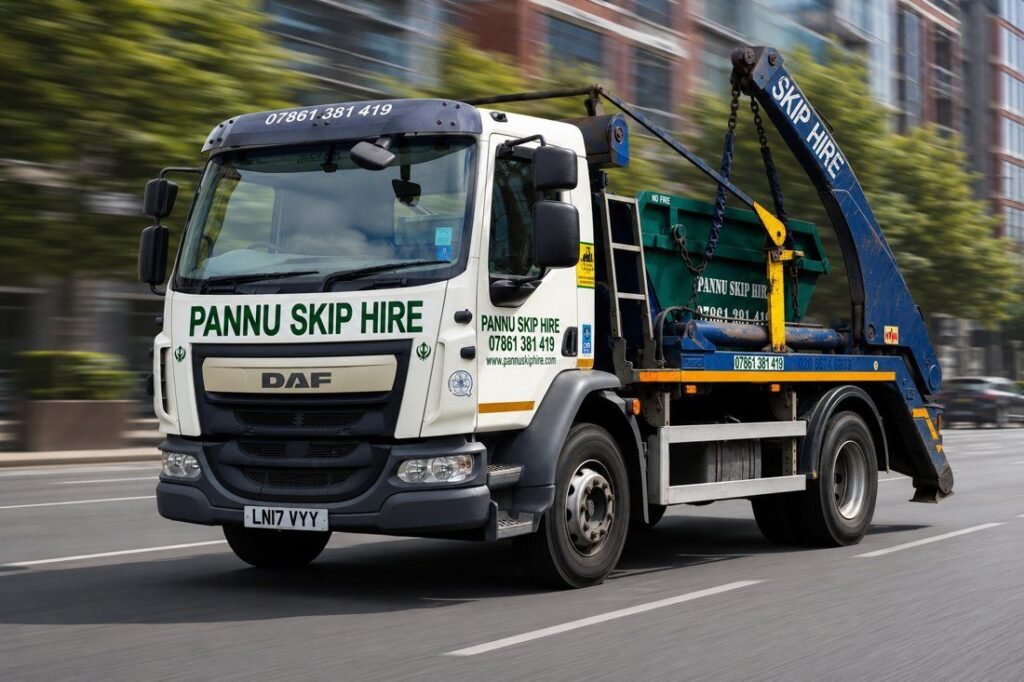
Your waste stays your responsibility, even after it leaves
Under UK law the person or business who produces waste holds a duty of care for where it ends up. That duty does not transfer to the skip company when the lorry pulls off your drive. If waste from your job is later found dumped somewhere it should not be, the trail leads back to whoever produced it.
Around Cannock that is not theoretical. The Chase attracts fly tipping precisely because it is open, wooded and quiet, and reported incidents there have included building waste and asbestos sheeting believed to have come from commercial properties in the Cannock, Rugeley and Stafford area. That is exactly the kind of load a cut price operator without a licence takes on and dumps.
Our waste carrier registration is CBDU576197. It is on the Environment Agency public register and it takes about a minute to check. Check it for us, and check it for anyone else you ring.
We know which way to come into town
Cannock sits where the A5 and A34 meet the M6 and the M6 Toll, which makes it unusually well connected for a town of its size and unusually variable to drive into. The Toll takes a lot of the through traffic that would otherwise sit on the A5, so the practical routes in change depending on the time of day and which side of town you are on.
For jobs in Bridgtown, Hawks Green and the southern side we come in off the A5. For Hednesford, Rawnsley and the north of the district we approach from the Stafford side. It sounds like a small thing. It is the difference between an early morning delivery and a driver sitting in queues near the retail parks at the wrong hour.
Retail and industrial work is normal for us
Cannock has a heavier concentration of retail and distribution than most Staffordshire towns, between the Orbital Retail Park, the Designer Outlet at Mill Green and the industrial estates spread around Hawks Green and Bridgtown. Shop fits, unit clearances and warehouse work behave differently from domestic jobs: the volumes are larger, the waste is lighter, and the timing is usually dictated by trading hours rather than daylight.
We take that work regularly, and we would rather agree a delivery window that suits your opening times than turn up when it suits our round.
Collections that flex, because jobs slip
A bathroom takes longer than planned, a shop fit waits on a landlord, weather stops a roof. Being a short run away means we can usually leave a skip longer or swap a full one quickly without it wrecking the week. That flexibility is worth more than a headline price, and it is the thing customers actually ring back about.
The six sizes, with Cannock examples
4 yard mini skip
Best for heavy waste and tight frontages. In the older terraced streets around the town centre and in parts of Bridgtown, kerb space is limited and driveways are short, so the smallest skip is often the only thing that fits properly.
It is also the right size, not a compromise, when the load is dense. Soil, brick, hardcore, concrete and old floor screed hit the safe lifting weight long before they fill the container. A bathroom strip out in a terrace, a small garden clear, or lifting an old path all sit comfortably here.
6 yard midi skip
The one most Cannock householders end up with. A full kitchen removal in a semi in Heath Hayes or Chadsmoor fits, along with old units, worktops, flooring and tiling. It handles a decent garden clearance too, and it is the usual choice for a landlord turning a property around between tenancies.
It still fits on a typical post war driveway without swallowing the whole frontage.
8 yard builders skip
The trade standard. Extensions, re roofs and full refurbishments produce timber, plasterboard offcuts, broken tile, packaging and stripped out fittings in volume, and an 8 yard takes it without needing swapping constantly.
Worth flagging for roofers: a skip filled entirely with concrete tiles reaches its weight limit while still looking half empty. Tell us the tile type when you book and we will size it properly.
10 yard maxi skip
For volume rather than weight. Loft conversions, full house clearances and larger garden redesigns produce enormous bulk at very little weight. This is also the largest skip that can be permitted on a public road, so if you have no driveway, 10 yard is your ceiling.
12 yard maxi skip
Private land only, and light waste only. This is a commercial size, and around Cannock it earns its keep on retail fit outs and office strip outs where ceiling tiles, partition board, shelving, counters and signage take up far more space than they weigh.
14 yard maxi skip
Our largest, again private land only. Suited to warehouse clearances and full commercial fit outs on the estates around Hawks Green and Bridgtown, where there is yard space for the lorry to place and lift safely.
Full dimensions for every size are on our skip sizes guide.

Matching the skip to the job
Book by describing the material rather than the room. Weight, not volume, is what limits a skip, and these are the jobs that come up most often around Cannock.
Kitchen renovations
A 6 yard. Break the carcasses down before loading and you will use around a third less space. Stone and composite worktops are heavier than they look, so mention them when you book.
Bathroom renovations
A 4 yard. This is a weight job, not a volume one. A cast iron bath, wall tiling and floor screed can use the entire weight allowance while the skip still looks part empty.
Garden clearances
A 6 yard for green waste. Hedge cuttings, prunings and turf are bulky and light, and a single mature hedge run fills more than people expect. If soil or old paving is coming out too, that is heavy material and often better in a separate smaller skip.
Garage clearances
A 4 to 6 yard, depending on whether it is boxes and tools or old slabs and engine parts. Garages are also where prohibited items collect. Paint tins, car batteries, gas bottles and old fridges all turn up in garage clears, and none can go in the skip.
Loft conversions
A 10 yard. Old insulation, boarding and decades of stored belongings are almost pure volume. One of the few domestic jobs where going a size up genuinely saves money rather than wasting it.
Extensions
An 8 yard, often more than one. Continuous waste across weeks rather than a single load. Keep dug out subsoil separate from the mixed build waste where you can, because it is far denser.
Retail refurbishments
A 12 yard where there is private space, an 8 or 10 yard where the skip has to go kerbside. Cannock has a lot of retail, and the constraint is usually access and trading hours rather than volume.
Office clearances
A 10 to 12 yard. Desks, chairs, partitioning, filing and cabling are awkward shapes rather than heavy ones. Plan around building access and lift availability.
Construction sites
An 8 yard on rotation. Mixed waste, heaviest at the base of the load. Plasterboard must be kept separate because it needs its own disposal route and contaminates a mixed load if it is buried in the middle.
Warehouse waste
A 12 or 14 yard, since these sites almost always have yard space. Pallets, packaging, racking and obsolete stock. High volume, low weight, and no permit needed on private land.
Commercial projects
Size depends on the premises, but the recurring theme is timing. Work often has to happen outside trading hours. Tell us the constraint and we will work to it rather than around it.
Rental property refurbishments
A 6 or 10 yard depending on how much the previous tenant left. Short windows between tenancies mean collection speed matters more here than anywhere else.
Delivering skips around Cannock
A town centre in the middle of demolition
Cannock town centre is not a normal delivery environment at the moment, and it is worth knowing before you book.
Cannock Chase Council is delivering a regeneration programme worth around £26 million, built around clearing sites rather than filling them. The council bought the Forum shopping centre in February 2025 and has since approved its demolition. The multi storey car park demolition is already underway, and the indoor market hall is part of the same programme.
For anyone working in or near the centre this changes things practically. Parking capacity is reduced while the multi storey comes down, traffic management around the works shifts, and some access routes are temporary. If your job is in the centre, tell us the address early and we will work out the approach rather than discovering it on the morning.
The retail parks and Mill Green
The £160 million McArthurGlen Designer Outlet West Midlands opened at Mill Green in April 2021 and is the biggest single change to Cannock’s economy in years. It currently employs around 1,200 people and has announced plans to expand from 75 to 100 stores, adding a street food and dining area, with its workforce expected to grow by almost half by 2027.
Combined with the Orbital Retail Park, that concentration of retail means two things for us. Traffic around those junctions is heavy at predictable times, so we plan around it. And retail units change hands and refit regularly, which is steady commercial work.
Hednesford, Chadsmoor and the northern side
Residential and mixed, with a good stock of older housing and post war estates. Access is generally reasonable, and most skips go on driveways. We come at this side from the Stafford direction rather than through the town centre.
Heath Hayes, Norton Canes and the eastern side
Predominantly residential with larger plots in places, which makes garden and landscaping work more common. Norton Canes sits close to the M6 Toll, and access here is usually straightforward for a lorry.
Bridgtown and Hawks Green
The commercial and industrial side of Cannock. Trade counters, units, yards and workshops sitting alongside residential streets. Access is designed for vehicles, and there is often room for maxi skips on private land, so this is easier territory for larger sizes.
Great Wyrley and Cheslyn Hay
South of Cannock proper and technically in South Staffordshire district rather than Cannock Chase, though most people treat them as part of the same area. We cover both. The district boundary occasionally matters for council services, but not for skip permits, which are handled at county level either way.
The Chase itself
Cannock Chase was designated an Area of Outstanding Natural Beauty in 1958 and was renamed a National Landscape in November 2023. Roughly 56 per cent of it is owned by just five public bodies.
You cannot put a skip on it, obviously. The reason it matters to this page is that the Chase is where fly tipped waste from the surrounding towns tends to end up, which is the practical argument for using a registered carrier rather than the cheapest van that answers the phone.
How Cannock housing affects the skip you need
Cannock grew as a coalfield town. Mining in the area dates back to at least the 13th century, but the town expanded properly in the 19th century with the Cannock Chase coalfield. Mid Cannock colliery closed in 1967, and Littleton, the last colliery in the Cannock Chase area, closed in 1993. That history still shapes the housing stock and the waste that comes out of it.
Terraced houses
Concentrated near the town centre and in the older parts of Bridgtown and Chadsmoor. Narrow frontages, short or no driveways, and often no rear access.
The waste is dense: lath and plaster, old timber, chimney rubble, thick screeds. That combination of heavy waste and limited kerb space is why a 4 yard is so often the right answer here, and why a road permit is frequently needed.
Semi detached homes
The most common house type across Heath Hayes, Chadsmoor, Hednesford and the post war estates. Driveways will usually take a 4 or 6 yard without blocking the whole frontage, and access is rarely a problem. This is the heartland of kitchen refits, bathroom refits and garage clearances.
Detached homes
More common towards Norton Canes, parts of Heath Hayes and the edges of the district. Longer drives, bigger gardens and integral garages, which shifts the work towards landscaping, extensions and larger clearances. Usually room for an 8 yard on private land.
New build developments
Modern estate roads are wide but often have restricted parking, shared drives and tight turning heads. The waste profile is different again: packaging, offcuts, turf and subsoil from landscaping a new garden rather than demolition waste. New build gardens tend to get landscaped within the first couple of years, which is a steady source of green waste and spoil.
Commercial premises
Retail units, trade counters and offices around the town centre, the retail parks and Bridgtown. Access varies enormously. Units with rear service areas can take large skips easily; high street frontages usually cannot, which pushes the skip kerbside and into permit territory.
Industrial units
The estates around Hawks Green and Bridgtown. Yard space, hard standing and vehicle access designed in. These are the sites where 12 and 14 yard maxi skips make sense.
A note on older properties and asbestos
Given when much of Cannock’s housing and outbuildings were built, asbestos turns up more often than people expect, particularly in garage roofs, artex, older floor tiles and insulation board. It cannot go in a skip under any circumstances. If you suspect it, stop and have it identified before disturbing it. This is not caution for its own sake; asbestos sheeting has been among the material fly tipped around the Chase.
What is changing in Cannock, and what it means for waste
The regeneration programme
Cannock Chase Council is running a regeneration programme worth around £26 million, and unusually it is demolition led. The phased clearance covers the former Forum shopping centre, bought by the council in February 2025 with demolition since approved, the multi storey car park, now being demolished, and the indoor market hall. The aim is to unlock development sites rather than refurbish what is there.
The Designer Outlet expansion
McArthurGlen’s Designer Outlet West Midlands at Mill Green opened in April 2021 at a cost of £160 million. The announced expansion takes it from 75 to 100 stores with a new street food and dining area, and is expected to grow the workforce from around 1,200 by nearly 50 per cent by 2027.
What this actually means for a firm our size
Major demolition and retail construction contracts have their own waste arrangements, and we are not going to pretend otherwise. The work that reaches us is what follows on.
Town centre clearance displaces businesses, and displaced businesses fit out new premises elsewhere in the town. An expanding outlet means more retail employment, which supports housing demand across Cannock, Hednesford and Heath Hayes. More households moving means more refurbishments before sale, more rental turnaround and more garden and garage work. That second wave is our work, and it is why Cannock is busier for trades now than it has been for a while.
Permits for a skip in Cannock
Driveway or highway
On your own driveway or private land, no permit is needed and no council is involved. That covers most domestic jobs in Cannock.
If any part of the skip sits on the public highway, which includes the road, the footway and the verge, a permit is required.
Which authority, and why it is not the district council
This trips people up. Cannock Chase District Council handles bins, planning and local services, and it is the council most residents deal with. But it is not the highway authority.
Staffordshire County Council is the highway authority for Cannock, and skip permits come from the county. If you have been searching the district council site for a skip permit, that is why you could not find one.
You do not apply, we do
Staffordshire County Council requires the application to be made by the company delivering and placing the skip, and that company must be registered with the authority beforehand. A member of the public cannot apply for their own skip permit.
So from your side the process is short: tell us the skip is going on the road, and we handle the application and the conditions attached to it.
Safety requirements
Permitted skips carry conditions. In practice that means proper reflective markings and lighting at night, cones where the placement requires them, and positioning that does not obstruct drainage, access to premises, fire hydrants, gullies, manholes or utility apparatus. All highway users must be able to pass safely, including people with mobility or visual impairments.
The county also restricts deposit and collection to between 07:30 and 20:30 unless a special condition applies, and requires the permit holder to carry public liability insurance of at least £5 million for any one claim. We handle the markings, lighting and cones as part of a permitted delivery.
Lead times
The permit has to be granted before the skip is placed, so a road placement always needs more notice than a driveway drop. In the town centre, where the demolition works are changing access and parking, allow more time still.
We are describing the council’s published requirements rather than giving legal advice. Current conditions and fees are on the Staffordshire County Council skip permit pages.
What can and cannot go into your skip
Accepted waste
- General household waste, including furniture, carpets, boxes and non electrical fittings
- Wood and timber, from floorboards and joists to fencing, pallets and kitchen carcasses
- Metal such as radiators, gates, railings, guttering, pipework and racking
- Concrete and brick, which are dense, so smaller skips apply
- Soil from excavation and landscaping, within weight limits
- Garden waste, including hedge cuttings, branches, prunings and turf
- Furniture, broken down where possible to save paid for space
- Construction waste, the mixed output of most building work
- Cardboard, the bulk of most retail and fit out clearances
- Plastic, including guttering, non hazardous fittings and packaging
- Plasterboard, accepted but kept separate because it needs its own route
What cannot go in, and why
- Asbestos. Hazardous and tightly regulated, requiring a licensed specialist. Common in garage roofs, artex, older floor tiles and insulation board in properties of Cannock age. It has also been among the material fly tipped around the Chase, which is exactly why it is treated seriously.
- Paint, solvents, oils and chemicals. Liquid hazardous waste leaks through a load, contaminates material that would otherwise be recycled, and cannot be separated afterwards. Fully dried, empty tins are usually fine. Part full ones are not.
- Gas bottles and aerosols. Pressurised containers are an explosion risk when a skip is tipped or waste is crushed at a transfer station.
- Tyres. Banned from landfill and required to go through a dedicated recycling stream.
- Fridges, freezers and air conditioning units. These contain refrigerant gases that must be extracted under controlled conditions before the unit is broken up.
- Electrical appliances. Covered by separate electrical waste regulations and recovered through their own route.
- Batteries. Heavy metals and acids, and one of the most common causes of fires in waste vehicles and transfer stations.
- Hazardous chemicals of any kind, including garden chemicals, pesticides and fuel.
- Medical and clinical waste. Needles and dressings require specialist handling.
If you are unsure about an item, ask before it goes in. Sorting a contaminated load costs far more than a phone call.
Where your waste actually goes
When we collect a skip from Cannock it goes to a licensed waste transfer station to be sorted. It does not go straight to disposal, and it certainly does not go anywhere it should not.
How sorting works
Bulky items come off first. The rest is separated into streams: timber, metals, inert material such as brick and concrete, plasterboard, green waste and residual waste. Timber is chipped for board manufacture or biomass. Metals are recovered for reprocessing. Inert rubble is crushed into secondary aggregate and often returns to construction as sub base. Green waste is composted. Only the genuinely non recoverable fraction goes to final disposal.
Why segregation on site matters
What goes into the skip decides how much comes back out. One tin of paint tipped into a mixed load can contaminate material that would otherwise have been recycled, converting a recoverable load into a disposal one. Keeping plasterboard separate works the same way. That is the practical reason for the prohibited list, and it is a better reason than simply citing rules.
Responsible disposal, and why it matters more here
Cannock sits against a protected National Landscape that suffers from fly tipping. Every load that goes through a licensed transfer station is a load that does not end up on a forest track.
Using a registered carrier is how you meet your duty of care, and it is also the difference between waste being handled and waste being moved somewhere out of sight. Our registration is CBDU576197 on the Environment Agency public register.
Eight things worth sorting before delivery day
Describe the material, not the room. The most common ordering mistake is judging by volume when the waste is dense. A bathroom tells us less than a cast iron bath, wall tiles and the old screed.
Clear the access first. A skip lorry needs room to reverse and overhead clearance to lower and lift. Move cars, bins and low branches beforehand. On the older terraced streets an early slot, before parking fills, is worth more than anything else.
Board the driveway. A loaded skip is heavy enough to mark block paving, tarmac or resin. Scaffold boards spread the load and cost a fraction of a repair.
Load heavy at the bottom, spread evenly. Not heaped at one end. Break down furniture and flatten packaging as you go.
Never fill above the rim. An overfilled skip cannot be sheeted safely and cannot legally be lifted. If you have misjudged it, tell us and we will swap it rather than leave you stuck.
Mention the neighbours. Not a legal requirement on private land, but on a terraced street a quick word prevents nearly every dispute, particularly if the lorry will briefly block the road.
Plan the permit early. This is the single biggest cause of delay, and more so at the moment given the town centre works.
Watch the forecast and plan the collection. Rain adds real weight to soil, plasterboard and green waste, so cover a nearly full skip if heavy rain is coming. And give us a rough finish date so we can place the collection sensibly, especially for commercial premises where trading hours matter.
Cannock skip hire questions, answered
Areas we cover around Cannock
We cover Cannock and the surrounding area, including Hednesford, Heath Hayes, Great Wyrley, Norton Canes, Cheslyn Hay, Rawnsley, Brereton, Burntwood, Rugeley and Brownhills, as well as Penkridge, Stafford and Wolverhampton.
Full sizes are on our skip sizes guide, and domestic, builders, commercial, same day and wait and load options are on our services page.
Need a skip in Cannock?
Tell us your postcode and what you are clearing, and we will recommend the right size and price it. If it has to go on the road, we will apply for the permit.